How to Buy a USDA-Eligible Home Near Charleston, Step by Step
From checking your income to getting the keys, here is the order of operations for a USDA purchase in Berkeley, Charleston and Dorchester counties, and where buyers get tripped up.

The short version
- Check your income first, then get pre-approved with a lender that closes USDA loans.
- Check every address on USDA's map before you write an offer.
- Leave extra time in the contract. After the lender approves the loan, USDA reviews it and issues a conditional commitment.
- The appraiser checks the home against HUD's minimum property standards, so condition matters more than on some loans.
The steps
- Check your household income. Add up every adult's income, subtract USDA's deductions and compare it with the limit: $135,150 for 1 to 4 people in the Charleston metro. See income limits.
- Get pre-approved by a USDA lender. USDA guaranteed loans are made by approved private lenders, not by USDA directly. Ask how many USDA loans the lender closes and what credit score it requires. Bring pay stubs, W-2s, tax returns and bank statements for everyone in the household with income.
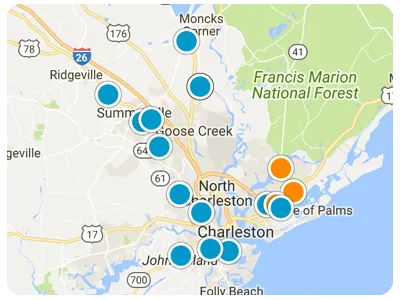
- Set your search area. Focus on areas where USDA works, such as Moncks Corner, Ridgeville, Hollywood, Ravenel and the edges of Summerville. See where USDA loans work.
- Check the address before you offer. Use USDA's property eligibility map, or send the address to us. A listing that says "USDA" means the seller is open to it, not that USDA has approved the location.
- Write a USDA-ready offer. Name USDA financing in the contract, allow enough time to close, and ask for seller-paid closing costs if you need them. USDA allows seller contributions of up to 6% of the price.
- Order inspections. A home inspection and, in South Carolina, the CL-100 wood infestation report are standard. For a rural home, also test the well water and have the septic system checked. Problems found here can block the loan.
- Appraisal and repairs. The appraiser confirms value and checks the home against HUD's minimum property requirements. Expect questions about roofs, peeling paint on older homes, water, septic and safety items. Required repairs are usually finished before closing, or the money is held in escrow when the lender allows it.
- Lender approval, then USDA's review. The lender underwrites the loan through USDA's automated system and sends it to USDA, which issues a conditional commitment. Funding for the new fiscal year opens about a week after October 1, so late-September and early-October closings can slip.
- Close with a South Carolina attorney. South Carolina requires a licensed attorney to supervise the title search, documents, closing and recording. Bring certified funds for any closing costs not covered.
- File for the 4% tax rate. Once you live in the home, apply for the owner-occupied rate with the county. It can cut the tax bill by thousands. See our 4% vs. 6% guide.
Common deal breakers
The address isn't eligible
The most common surprise on the edges of Summerville and Goose Creek. Check before you pay for inspections.
Income goes over the limit
A raise, a new job or another adult moving in can change the math. Tell your lender about changes right away.
The home needs work
Major repairs, failing septic systems and water problems can stop a USDA appraisal. Homes sold as-is are often a poor fit.
It's a farm or a business
USDA won't finance working farms, vacant land or property mainly used to earn income. A home on acreage is fine.
Keep going
- USDA home loans near Charleston: the full guide
- Payment and affordability calculators with USDA and FHA
- First-time buyer guide
- Buying land near Charleston
Ready to look at USDA homes?
Tell us your budget and where you work. We'll build a search around USDA-eligible areas and check each address before you fall for it.
Sources: USDA Rural Development program page and Handbook HB-1-3555; USDA fiscal year 2027 conditional commitment notice (September 16, 2026); South Carolina Supreme Court rulings on attorney-supervised closings (State v. Buyers Service, 1987). Checked November 27, 2026.
Address Search
Interactive Map Search
Trusted Lender

Haldeman Shelbourne
Loan Officer, NMLS #2804916
Evolution Mortgage
(843) 743-4713
hshelbourne@evolutionmortgage.com
Evolution Mortgage NMLS #2432729. Equal Housing Lender.
Connect With Us